





The hardest garment, the best business.
Bridal is the one category where clients expect couture construction and pay couture prices as a matter of course. It is also the category your average factory cannot touch: a gown stands or falls on its internal architecture, the corset, the canvas, the boning, the way a train releases into a bustle, and on handwork, the lace placement and the beading, that production lines are not built to do. That gap is the opportunity: a bridal brand with access to real construction sells at four figures from its first season, because the garment justifies it on the body.
The economics are the best in fashion if the model is right. A gown is developed once: pattern, toile, lace and fabric sourcing, an embroidery sample where the design calls for it. After that, every sale is a remake to a specific bride's measurements at production price alone, no design fee ever again. Your collection is not inventory hanging in a stockroom; it is a catalogue of approved masters, produced one commission at a time.
The piece, and the proof.
The gown, then its sleeve beading at thread level. Click the detail to inspect it.
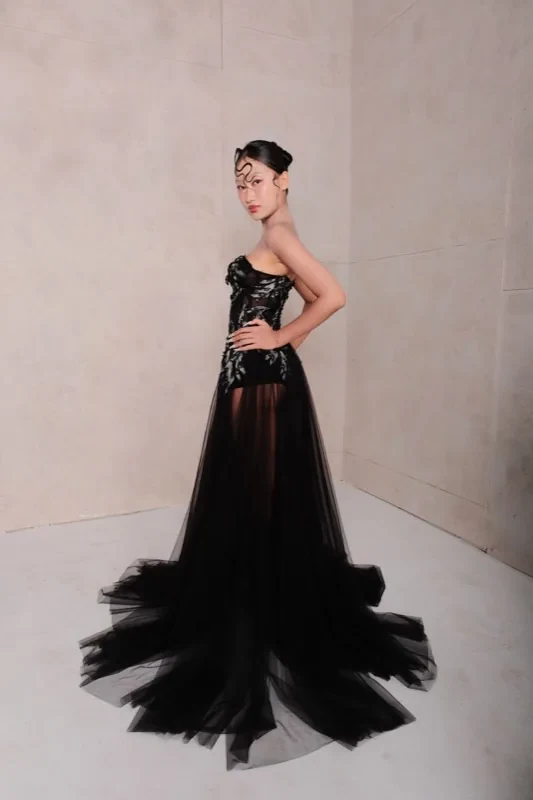

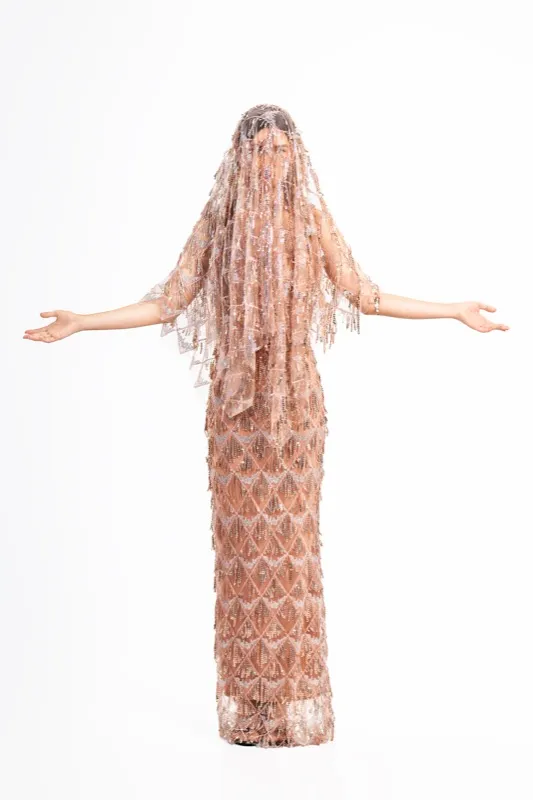
What a gown is made of.
The internal architecture.
Corsetry with steel or synthetic boning, waist stays, cups, and canvas through the bodice. This is what lets a strapless gown be danced in for ten hours, and it is invisible precisely when it is done right.
Lace, placed by hand.
Leavers and chantilly laces are cut motif by motif and rebuilt on the gown so seams disappear inside the pattern. Appliqué placement is design work as much as sewing, and it is where a gown's price quietly lives. Sourcing is covered in the fabric guide.
Beadwork and embellishment.
Pearl fields, crystal gradients, embroidered veils: priced by the hour of handwork and quoted with the hours stated. Bridal beading favors subtlety at the bodice and drama at the veil, where hours photograph best.
Trains, bustles, and the second look.
A train is engineered twice: once to fall, once to disappear. French, American, or ballroom bustles are planned at the pattern stage, not improvised at the final fitting. Detachable overskirts and sleeves turn one gown into a ceremony look and a reception look, and brides pay for both.
Made to measure, remotely.
Your bride is measured by your team or by any second person following our written protocol, with a video-guided session and tolerances agreed before cutting. The full system, including who pays customs, is in the remote production guide.
Your label, not ours.
Everything ships under your brand: your labels sewn in, your care cards, your packaging if you have it. The atelier's name appears nowhere a bride will look.
Three ways to run a bridal brand.
Sell first, produce second.
- Develop 4 to 8 master gowns as your collection
- Trunk shows and fittings sell from samples
- Each sale is a remake to the bride's measurements
- Zero finished-goods inventory risk
Small runs, standard sizes.
- Five-unit minimums per style for stockists
- Simplified construction tiers for price points
- Samples for market weeks and showrooms
- Reorders carry no design fee, ever
Most houses run both: made-to-order couture at the top, a boutique line beneath it, the same masters executed at more than one level of handwork, stated honestly. Wedding seasons are unforgiving, so the calendar is planned backwards from the aisle: a first gown takes eight to fourteen weeks, remakes six to ten, and rush is a conversation we have before we promise, not after.
Where bridal brands bleed quietly.
Alterations creep.
"Free alterations" is the most expensive sentence in bridal. Define the included fittings in the sale contract, two is standard, and price the third. A gown that visits the table five times for free has donated its margin to politeness.
Body drift between measure and aisle.
Brides change: most lose or gain between first measurement and the wedding month. The professional answer is built in, not argued later: generous seam allowances held at the side seams, a final measurement at six weeks out, and a written tolerance policy the bride signed on day one.
Lace overbuy, or the nesting problem.
Motif-matched lace placement consumes 15 to 30 percent more lace than the pattern's area suggests, because motifs must land where the body says, not where the roll is economical. At $200 a meter, an unplanned matching allowance erases a gown's profit. We nest the appliqué plan before the lace order, not after.
Rush that was never priced.
Every bridal calendar eventually meets a bride who booked late. Rush is legitimate business at a stated surcharge agreed before cutting; absorbed silently, it trains your market to book late and bills your calmest clients for your most chaotic ones.
The season wall.
Orders cluster backwards from the big wedding months, and a workroom's capacity is finite in exactly those weeks. A house that publishes its cutoff, orders by this date deliver for this season, sells urgency honestly and protects every promised date it has already made.